
How Fire Insurance Claims Pay Out: A Huntsville Homeowner's Guide to Settlements
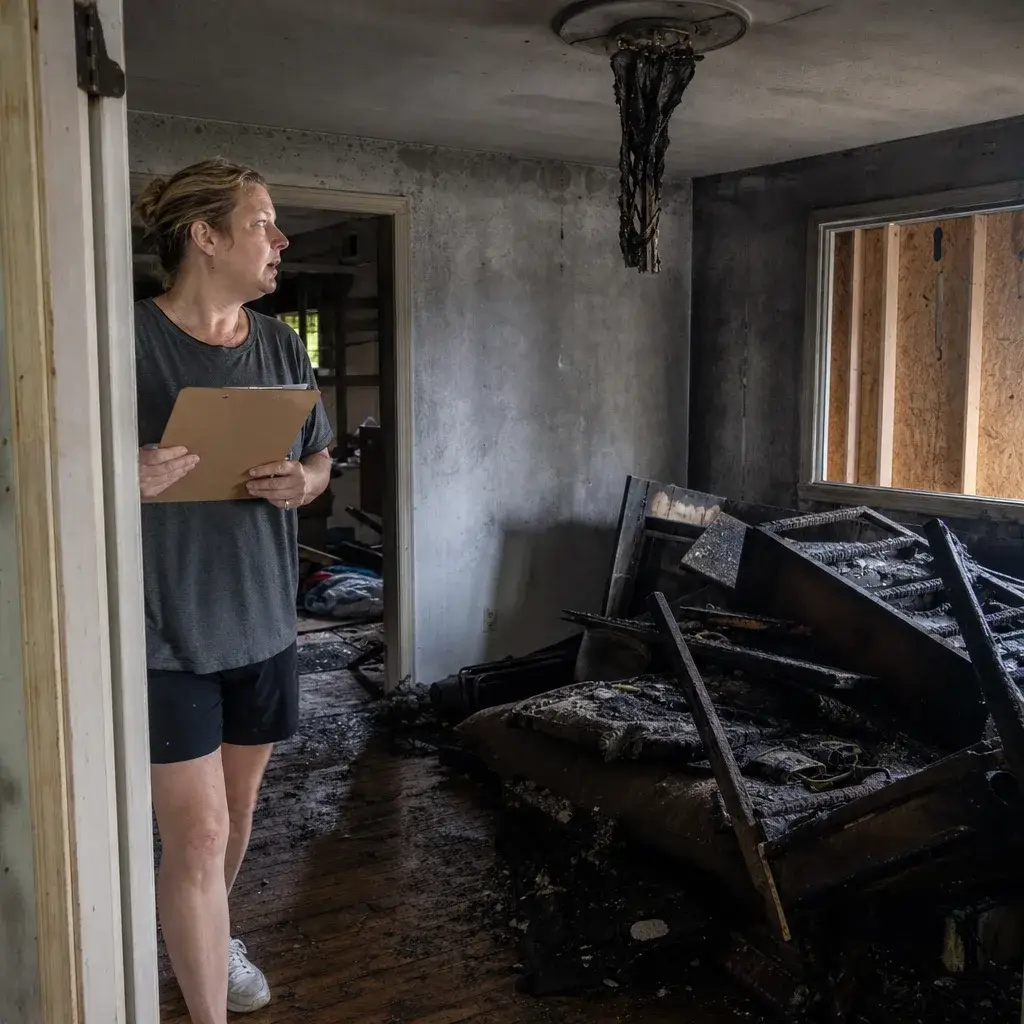
The Fire Insurance Claim Process, Step by Step
The first few days after a fire are a blur. You’re tired, and you’re scared. And somehow you’re supposed to start a claim while figuring out where to sleep tonight. Here’s the good news. The process has a clear order, and you don’t have to do it all at once.
We’ve walked a lot of Huntsville families through this. The ones who end up in the best spot usually followed these steps in this order.
- Get the fire report. Huntsville Fire and Rescue will create an incident report after they respond. Ask for a copy. Your insurance company will almost always want it.
- Call your insurance company right away. Report the fire and get a claim number. Write down who you talked to and when.
- Protect the house from more damage. Your policy likely requires this. Board up windows, tarp the roof, and shut off the water if pipes burst. Save every receipt.
- Document everything. Take photos and video of every room, even the ones that look fine. Smoke travels farther than you’d think. Start a written list of damaged items too.
- Meet the adjuster. The insurance company sends someone to inspect the damage. Walk the house with them. Point out things they might miss, like smoke stains in closets or soot in the attic.
- File your proof of loss. This is a sworn form that lists what you lost and what you’re asking for. Policies often set a deadline for it, so check yours.
- Review the settlement offer. Read it line by line. If something’s missing, you can ask questions and push back before you sign.
Step four is where we see the most mistakes. People throw out burned furniture before anyone photographs it. It feels good to clear the mess, but that proof is gone for good.
Did you also know the first check often isn’t the last one? Many policies pay the actual cash value first. That’s the value of your stuff after wear and age are taken off. You may get the rest, called recoverable depreciation, after repairs are done. Not every policy works this way. So read yours or ask your agent.
One more thing catches people off guard. If you have a mortgage, the check for the house itself may list your lender’s name too. That means your lender has to sign off before you can cash it. It’s normal, it just slows things down.
And keep receipts for hotel stays, meals, and extra driving. Lots of policies cover additional living expenses while you’re out of your home. Small receipts add up fast.
But here’s what nobody tells you. Sometimes the settlement doesn’t cover a full rebuild. Or you just don’t want to spend the next year managing contractors.
That’s a real option to think about, not a failure.
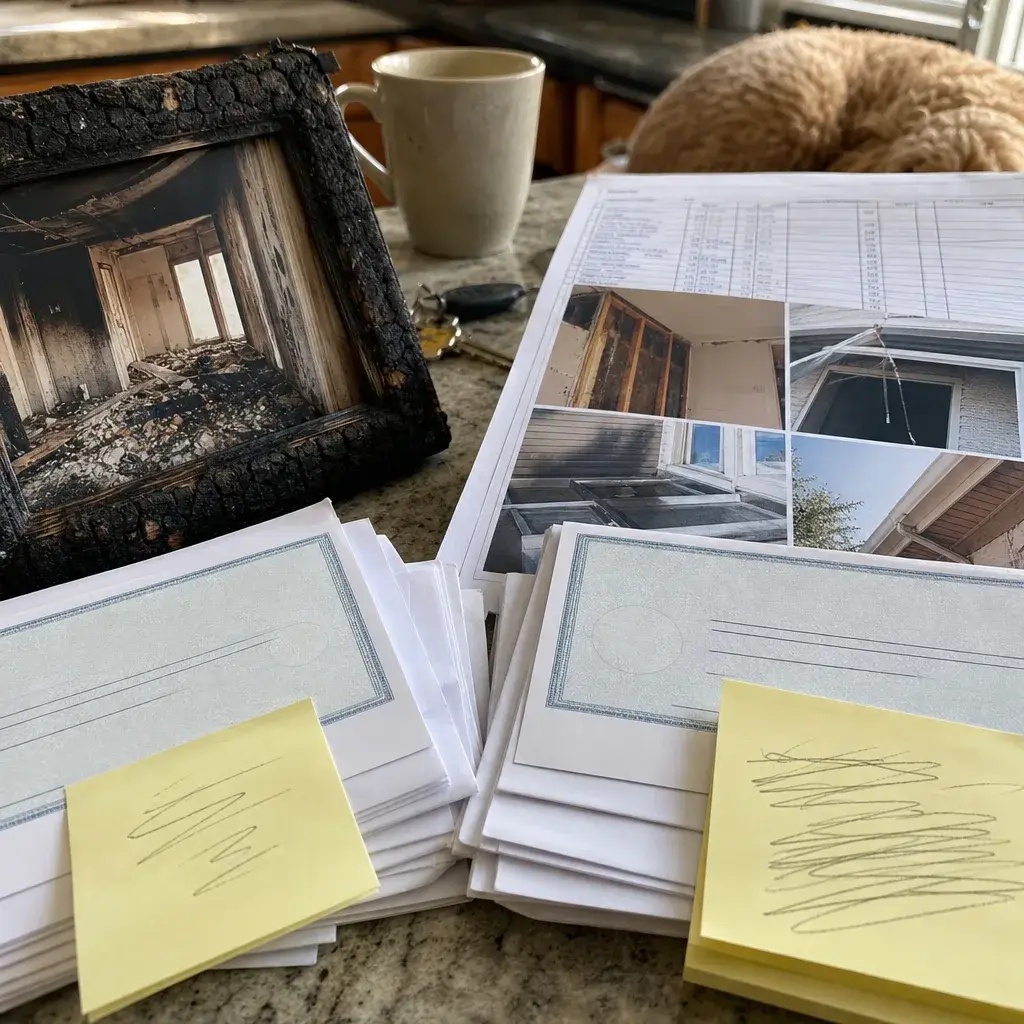
Actual Cash Value vs. Replacement Cost: Why It Changes Your Check
Two houses can burn the same way and get very different checks. The reason usually comes down to two phrases buried in your policy. Actual cash value. Replacement cost.
Actual cash value, or ACV, pays what your home and things were worth the day of the fire. That’s the cost to replace them minus depreciation. Depreciation is just a fancy word for age and wear. A 15-year-old roof isn’t worth what a new one is, your insurer knows that and pays less.
Replacement cost works differently. It pays what it takes to rebuild or replace with new items of similar kind and quality. No age discount in the end. But there’s usually a catch in how the money arrives.
Here’s how the two stack up. Keep your declarations page handy while you read this.
- ACV takes age and wear out of your payout from the start.
- Replacement cost covers rebuilding with similar new materials.
- Most replacement cost policies pay the ACV amount first and hold the rest back.
- That held-back money is often called recoverable depreciation.
- You usually get it only after repairs are done, and many policies set a deadline.
So even with replacement cost coverage, your first check may look a lot like an ACV check. We see this surprise all the time. Most people don’t find out until that first payment shows up.
Here’s a simple example. Say the cost to replace your fire-damaged roof is 20,000 dollars. The insurer decides it had lost half its value to age. With ACV, you’d get about 10,000 dollars and that’s it. With replacement cost, you’d likely get 10,000 dollars up front. The other half comes after the new roof is on.
And if that roof was already near the end of its life –
Well, you can guess how the math goes. This hits hard in older Huntsville neighborhoods like Five Points and Blossomwood. Many homes there have original materials from decades ago. Older materials often carry more depreciation.
So what happens if you can’t rebuild, or just don’t want to? In many cases you keep the ACV portion and give up the held-back depreciation. That’s a tough choice. Some owners decide the stress of a long rebuild isn’t worth it. That’s why many families start learning about fire-damaged house buying in Huntsville, since a sale doesn’t depend on finishing repairs first.
One quick tip from our fieldwork. Check your dwelling coverage and contents coverage separately. They don’t always use the same payout type. Your house might be on replacement cost while your furniture and clothes are on ACV. Call your agent and ask them to walk you through both in plain words. Ask about your repair deadline too.
Why Payouts Are Often Delayed, Partial, or Released in Stages
Most homeowners picture one big check showing up after a fire. That’s rarely how it goes. Fire insurance usually pays out in pieces, and the first piece often feels small.
We hear the same thing from Huntsville families almost every month. “I’ve had a claim open for weeks. Why haven’t they paid me yet?” The answer is almost never just one thing.
So here’s what’s usually going on behind the scenes.
- Your mortgage lender is named on the check. If you still owe on the house, the lender has a stake in the repairs. They’ll often hold the money and release it as work gets done.
- The insurer pays actual cash value first. That’s the value of your damaged stuff after wear and age. The rest, called recoverable depreciation, often waits until repairs are finished.
- The cause of the fire is still under review. Insurers may wait on a fire marshal report or their own investigator before paying the full claim.
- You and the adjuster don’t agree on the damage. Smoke and water damage can hide inside walls. Disputes over what needs fixing slow everything down.
- Paperwork is missing. A signed proof of loss, a contents list, or contractor estimates can hold up a payment for weeks.
None of this means your claim is in trouble. It’s just how the system is built.
Staged payments do have a purpose. Insurers want proof the money goes toward rebuilding. Lenders want to protect the loan. But for you, it can feel like you’re stuck waiting on everyone else.
And the holdback part catches people off guard more than anything. Say your roof and kitchen took heavy damage. The first check might cover only the depreciated value of those items. You won’t see the rest until a contractor finishes the work and you send in the final invoices. No repairs, no second check, that’s the rule in a lot of policies.
Is that frustrating? Absolutely. Is it unusual? Not at all.
One tip from the field: keep a simple log. Write down every call, every email, and every check you get. Note the date and who you talked to. When a payment stalls, that log helps you push things forward without guessing.
Partial payouts also happen when the policy limit is lower than the real cost to rebuild. Building costs around Madison County have climbed. Older policies don’t always keep up. Some folks find out the gap only after the adjuster’s numbers come back, and by then the options start to feel limited –
That’s usually the point where people start asking a different question. Do I even want to rebuild?
For some Huntsville homeowners, waiting months on staged payments just isn’t workable. Maybe you’ve already moved. Maybe the repairs feel like too much. That’s okay. You have more than one path, and selling the house as-is is a real option even with a claim still open.
Frequently Asked Questions
Most fire insurance claims pay out in stages over several weeks to several months. The first check, usually the actual cash value amount, often arrives within a few weeks of filing. The remaining recoverable depreciation comes later, after repairs are finished. Delays happen when paperwork is missing or when your lender needs to sign off on the check. If your settlement feels too slow or too low, it helps to compare your options early, including learning more on our fire-damaged house buying guide.
Recoverable depreciation is the extra money held back on replacement cost policies. You usually only collect it after repairs are fully done, and many policies set a deadline to claim it. If you can’t rebuild, or you decide not to, you may have to give up that portion. This is common for homeowners who don’t have savings to cover repairs up front. Check your declarations page to see exactly how your policy handles this.
Yes, older homes often see lower first-check payouts because of depreciation. Neighborhoods like Five Points and Blossomwood have many houses with original materials from decades ago. Insurers subtract age and wear from the value of things like roofs, flooring, and cabinets. That means the actual cash value check can be much smaller than the full replacement cost. This is a key reason many owners of older fire-damaged homes consider selling instead of waiting on a slow rebuild.
The biggest mistake is throwing away damaged items before they’re photographed. Once burned furniture, flooring, or belongings are hauled off, that proof is gone for good. Adjusters rely on photos and video to support your claim. Take pictures of every room, even ones that look fine, since smoke travels farther than expected. A few extra minutes with your phone camera can protect thousands of dollars in your settlement.
It depends on whether the payout covers a full rebuild and whether you want to manage months of contractor work. Sometimes the settlement falls short, especially on older homes with heavy depreciation. Other times, homeowners simply don’t want the stress of repairs dragging on for months. Selling as-is lets you walk away without waiting on contractors or depreciation checks. Our fire-damaged house buying guide for Huntsville homeowners walks through how that option works.
Your lender is listed on the check because they have a financial interest in your home. This is standard practice and doesn’t mean anything went wrong with your claim. It does mean you need their signature before you can cash or deposit the payment. This step can add time to an already slow process. Planning ahead for this can help you avoid extra delays while repairs or a sale move forward.
- We Buy Houses As-Is
- Locally Owned and Operated
- 30 Years Buying Houses in Madison County
- Fair Cash Offers, No Obligation
Related Help for Huntsville Homeowners
If this sounds like your situation, these pages can help:
- We buy fire-damaged houses in Huntsville
- What to Do After a House Fire in Huntsville: The First 30 Days
- Can You Get a Mortgage on a Fire-Damaged Property in Huntsville?
- Can Fire Damage Be Fully Repaired? What Huntsville Homeowners Need to Know
- How to Get a House Declared Uninhabitable: Step-by-Step Guide (2026)
- How our home buying process works