Can You Buy a House With Code Violations in 2026? What You Need to Know in Huntsville
What Counts as a Code Violation on a House
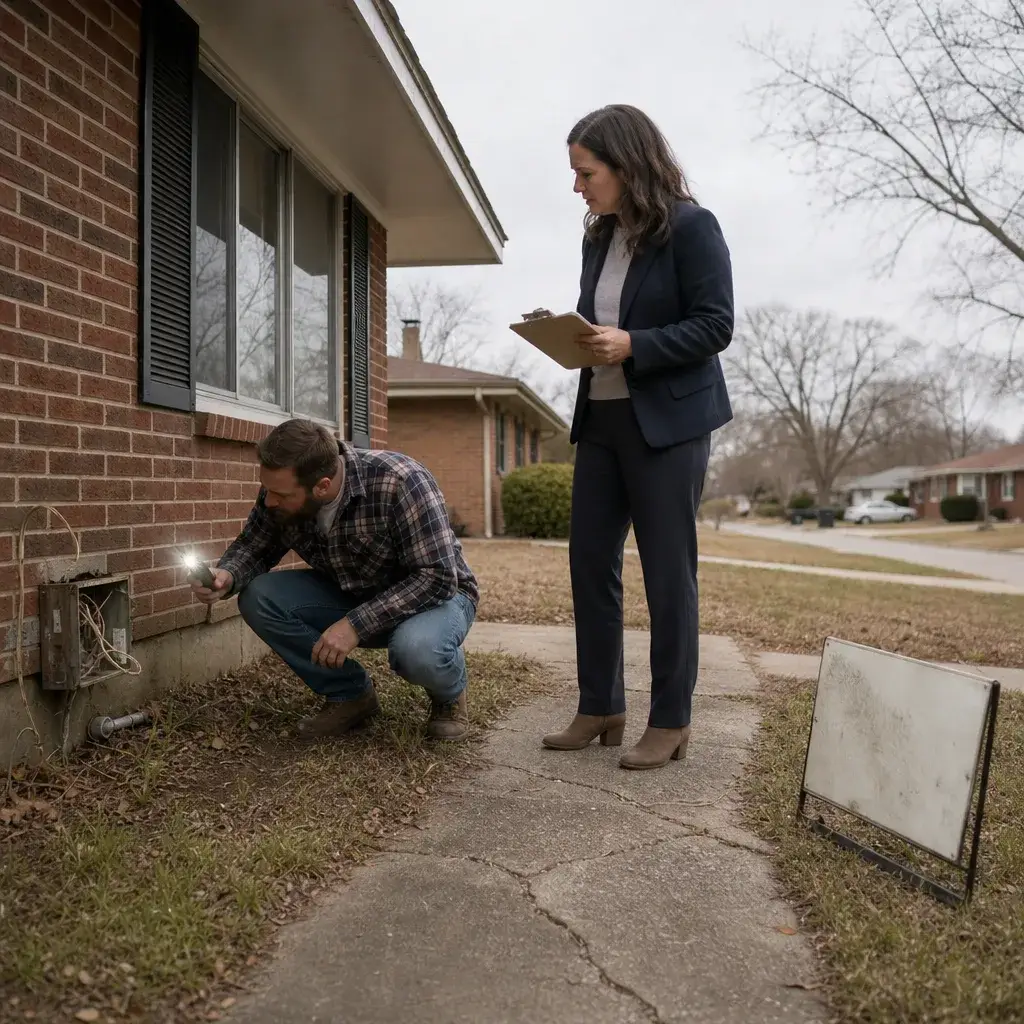
So what counts as a code violation? It’s simpler than it sounds. Cities set rules for how homes must be built and kept up. When a house breaks one of those rules, that’s a violation. The City of Huntsville handles these through its code enforcement office. Inspectors respond to complaints and check homes that look unsafe.
Most violations fall into two big groups. Some are about the outside of the property. Others hide inside the walls, under the floor, or up in the attic. The outside ones get noticed first, the inside ones usually cost more to fix.
Here are the ones we run into most often around Huntsville:
- Overgrown yards, junk piles, or abandoned cars sitting on the lot
- Roof damage, broken windows, or siding that’s coming loose
- Electrical work done without a permit, like a DIY garage subpanel
- Plumbing leaks, failing sewer lines, or missing smoke detectors
- Room additions, decks, or closed-in carports built without approval
That last one surprises people. Lots of homes in older parts of town like Five Points and Blossomwood have changes from decades back. Somebody closed in a porch in 1985. Nobody pulled a permit. Now it shows up on an inspection report.
Not every violation is equal. A cracked window is a small fix. Foundation damage or bad wiring is a different story. Those are safety issues. And they can keep a lender from approving a buyer’s loan.
Big difference.
Our weather doesn’t help either. Huntsville’s humid summers and heavy spring storms are tough on houses. Moisture leads to rot, mold, and sagging roofs. Left alone, those turn into violations fast.
There’s also a difference between a violation that’s on record and one that isn’t. An open citation means the city has already sent a notice. It may come with deadlines or fines. A hidden problem hasn’t been reported yet. But it can still pop up during a buyer’s inspection –
We worked with a homeowner near Lowe Mill who inherited her dad’s house. She had no idea the back bedroom was an unpermitted addition. A buyer’s inspector flagged it two weeks before closing. The deal fell apart. She called us, and we bought the house as-is without her fixing a thing.
Wondering if your house has an open citation? You can ask the city directly. Most people don’t realize they have one until a title search turns it up. We see this all the time with inherited and vacant homes.
But don’t panic. A violation doesn’t make a house unsellable.
Can You Legally Buy or Sell a House With Open Violations
Yes. You can legally buy or sell a house with open code violations in Huntsville. No Alabama law blocks the sale just because the city has written up the property. We get this question almost every week, and the relief on people’s faces is real.
But legal doesn’t mean simple. The violations don’t vanish when the deed changes hands. They follow the house, not the person.
So what happens when a house with open violations sells? Here’s how it usually plays out:
- The seller shares what they know about the open violations and any city notices.
- A title search shows whether the city has placed liens or unpaid fines on the property.
- Those liens usually get paid off at closing, often out of the seller’s proceeds.
- The buyer takes ownership and becomes responsible for fixing the remaining issues.
- The buyer works with the City of Huntsville to close out the case on a set timeline.
That last step matters most. The new owner inherits the problem along with the keys.
Alabama is often called a buyer-beware state. Sellers here usually aren’t required to list every flaw. Still, you can’t lie about a known problem or hide it on purpose. And if a buyer asks you directly about city notices, you need to answer. Being upfront protects you. It also speeds things up, most buyers walk away from surprises, not from problems they knew about.
Here’s where a lot of sales fall apart. Financing.
Most banks won’t lend on a home with serious open violations. FHA and VA loans have strict condition rules. A home with a failing roof, exposed wiring or a missing handrail often won’t pass their appraisal. So a buyer can love your house and still not get approved for it. That’s the part nobody warns you about until the deal is already shaky.
We worked with a seller off Pulaski Pike last year. She’d had two buyers lined up before us. Both loans died after the appraiser flagged the porch and some old electrical work the city had already cited. She wasn’t in trouble with the law. She just had the wrong kind of buyer for that house, and she’d lost three months finding that out –
That’s why code violation property buying in Huntsville works best with a buyer who already knows the local process. A cash buyer doesn’t need a lender’s approval. We can take on the open cases and handle the repairs after closing. And we deal with the city paperwork ourselves.
One fieldwork tip we always share. Before you list or accept any offer, call Huntsville’s code enforcement office and ask for the full case history on your address. Sometimes there’s an old violation you forgot about. Sometimes it’s already been closed and you didn’t know. Either way, you’ll go into the sale with a clear picture instead of a guess.
Open violations don’t make your house unsellable. They just change who the right buyer is.
Why Financing Is the Real Obstacle, Not the Law
Here’s something most people don’t expect. It’s usually legal to buy a house with open code violations in Huntsville. The city won’t block the sale, the bank might. So what kills these deals? The loan.
Most mortgages depend on the house’s condition, not just your credit score. Lenders want the home to be safe and livable. If it isn’t, they won’t lend on it. Simple as that.
Government-backed loans are the strictest. FHA, VA, and USDA loans all have minimum property standards. HUD’s handbook for FHA loans says the home must be safe, sound, and secure. An appraiser checks for this during the visit. If they spot a problem, the loan stalls until it’s fixed.
So what do appraisers flag? We see the same items come up again and again. Many of them overlap with common code violations:
- Exposed wiring or a panel that isn’t safe
- A roof that leaks or has little life left
- Stairs or decks missing their handrails
- Broken windows, plus doors that won’t lock
- No working heat source
- Peeling paint in a home built before 1978
That’s why a city notice and a failed appraisal often show up together. They’re looking at the same problems.
Conventional loans give you a little more room. But they still need the home to be livable. A house with no working plumbing or a condemned addition usually won’t pass either. Not much wiggle room there.
We’ve watched this play out in North Huntsville more than once. A buyer gets approved and falls in love with the house. Then the appraiser notes a sagging back porch and an open permit on a garage conversion. The lender freezes the loan. The seller can’t afford repairs, and six weeks of waiting goes nowhere.
The law isn’t the wall. The loan is.
And once you see it that way, your options get clearer. Here are the most common paths buyers take:
- Pay cash. No lender, no appraisal checklist.
- Use a renovation loan. FHA 203(k) and Fannie Mae HomeStyle loans roll repair costs into the mortgage. Expect contractor bids and extra time.
- Ask the seller to fix the problem before closing. This works best for small items like handrails or smoke detectors.
- Ask about a repair escrow. Some lenders hold back money until the work is done. Not every lender offers this, though.
Each path has trade-offs. Cash is the fastest, there’s nothing for a lender to reject. Renovation loans can work well, but they take patience and a lot of paperwork. Seller repairs depend on the seller having money and time.
If you’re the one selling, this matters even more. Your pool of buyers shrinks fast. Most families shopping in Madison County are using FHA or VA loans. Those are the exact loans most likely to fall through. And while you wait on a buyer’s lender, the city’s deadline keeps ticking –
That’s where we come in. We’re a local Huntsville cash buyer, and we buy code violation properties as-is. No appraisal hurdles. No lender telling you to fix the porch first.
See how we buy houses with code violations in Huntsville. Related guides: What Are Code Violations? · What Happens If You Don’t Fix a Code Violation
FAQ: Can You Buy a House With Code Violations?
You can call the City of Huntsville’s code enforcement office and ask for the case history on the address. Most buyers find out during a title search instead, which is often too late to plan ahead. Asking early gives you a clear picture before you make an offer or list your home. This step takes a few minutes but can save weeks of surprises later.
Yes, it can. Most lenders check the home’s condition during an appraisal, not just your credit. FHA and VA loans have strict rules, so things like exposed wiring, a failing roof, or a missing handrail can cause the loan to fall through. This is why financing, not the law, usually stops these sales. A cash buyer skips this step entirely since no lender approval is needed.
A minor issue, like a cracked window, is usually a quick fix that won’t stop a sale. A safety violation, like bad wiring or foundation damage, is more serious and can block loan approval completely. Lenders treat these two very differently during an appraisal. Knowing which type you have helps you understand what a buyer or inspector will flag first.
Many homes in older parts of town, like Five Points and Blossomwood, were updated decades ago without pulling permits. A closed-in porch or extra room from the 1980s often never got recorded with the city. These changes stay hidden until an inspection or title search brings them up. It’s a common surprise for people who inherit or buy older Huntsville homes.
Yes, it does. Huntsville’s humid summers and heavy spring storms wear down roofs, siding, and foundations faster than in drier climates. Moisture that sits too long leads to rot, mold, and sagging structures, which can turn into new violations. Keeping up with weather damage early helps you avoid bigger problems showing up on an inspection report later.
No, you don’t have to fix every violation before selling. Alabama law doesn’t require you to repair the home first, though you do need to disclose known issues if a buyer asks. Many sellers choose a buyer who handles code violation property buying in Huntsville so repairs and city paperwork happen after closing instead of before. This saves time and keeps the sale moving.
- We Buy Houses As-Is
- Locally Owned and Operated
- 30 Years Buying Houses in Madison County
- Fair Cash Offers, No Obligation
Related Help for Huntsville Homeowners
If this sounds like your situation, these pages can help:
- We buy houses with code violations in Huntsville
- How to Fight a Code Enforcement Violation in Huntsville, AL (2026)
- Does Alabama Have Code Enforcement? What Huntsville Residents Should Know in 2026
- What Happens If You Don’t Fix a Code Violation in Huntsville, AL?
- Why Do Vacant Houses Deteriorate So Quickly? A Huntsville Owner’s Guide (2026)
- How our home buying process works