How to Fight a Code Enforcement Violation in Huntsville, AL (2026)
What Counts as a Code Enforcement Violation
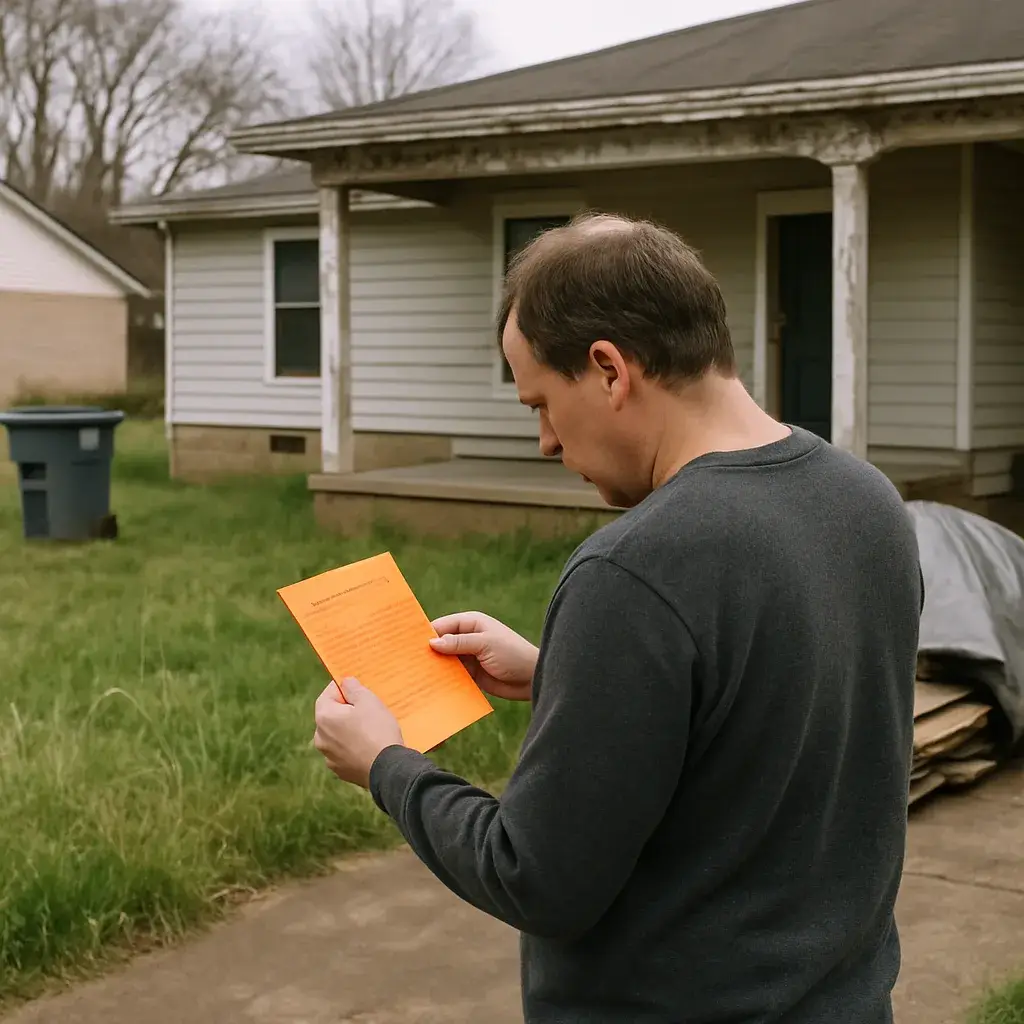
So what gets flagged? Huntsville’s code enforcement office handles a wide range of issues, and, some of them surprise homeowners. We’ve talked to plenty of folks who had no idea their property was even on the city’s radar until a notice showed up in the mailbox. Sometimes it’s a neighbor complaint. Sometimes it’s a routine drive-by inspection. Either way, the notice usually points to a specific rule under Huntsville’s municipal code.
Most violations fall into a few buckets. Some are about how a property looks from the street, others are about safety, and some are about how the property is being used. A vacant house with boarded windows can get flagged just as easily as a home with a collapsing porch. And older homes near downtown Huntsville or in neighborhoods like Five Points sometimes rack up violations simply because of age and wear, not neglect.
- Overgrown grass, weeds, or brush over the height limit set by city ordinance
- Junk, debris, or inoperable vehicles stored in the yard or driveway
- Structural issues like a sagging roof, broken windows, or unstable steps
- Peeling exterior paint, missing siding, or visible fire damage
- Unsafe or unpermitted additions, sheds, or fencing
- Properties left vacant with no upkeep, sometimes attracting squatters or pests
Here’s something a lot of people don’t realize. A violation doesn’t always mean the whole house is unsafe. Sometimes it’s one small thing, a broken gutter or a fence that’s leaning too far. But the city still treats it as a formal violation, which means you’ll get a letter with a deadline. Miss that deadline, and the fines start piling up fast.
We’ve seen this play out with inherited properties more than anything else. A family member passes away, the house sits empty for months, and by the time anyone checks on it, the yard is waist-high and the paint is peeling. The heirs had no idea a violation notice was even mailed. This is incredibly common in Madison County, especially with older homes that get passed down without a clear plan for upkeep.
Renters can trigger violations too, particularly with hoarder situations or when tenants stop maintaining a rental property. Landlords sometimes don’t find out until the city sends a formal citation. And vacant homes, whether from a move, a divorce, or a long probate process, tend to get flagged more than occupied ones simply because no one’s around to fix small problems before they grow.
Not every violation is a crisis, but every violation deserves attention.
Steps to Appeal a Code Violation Notice
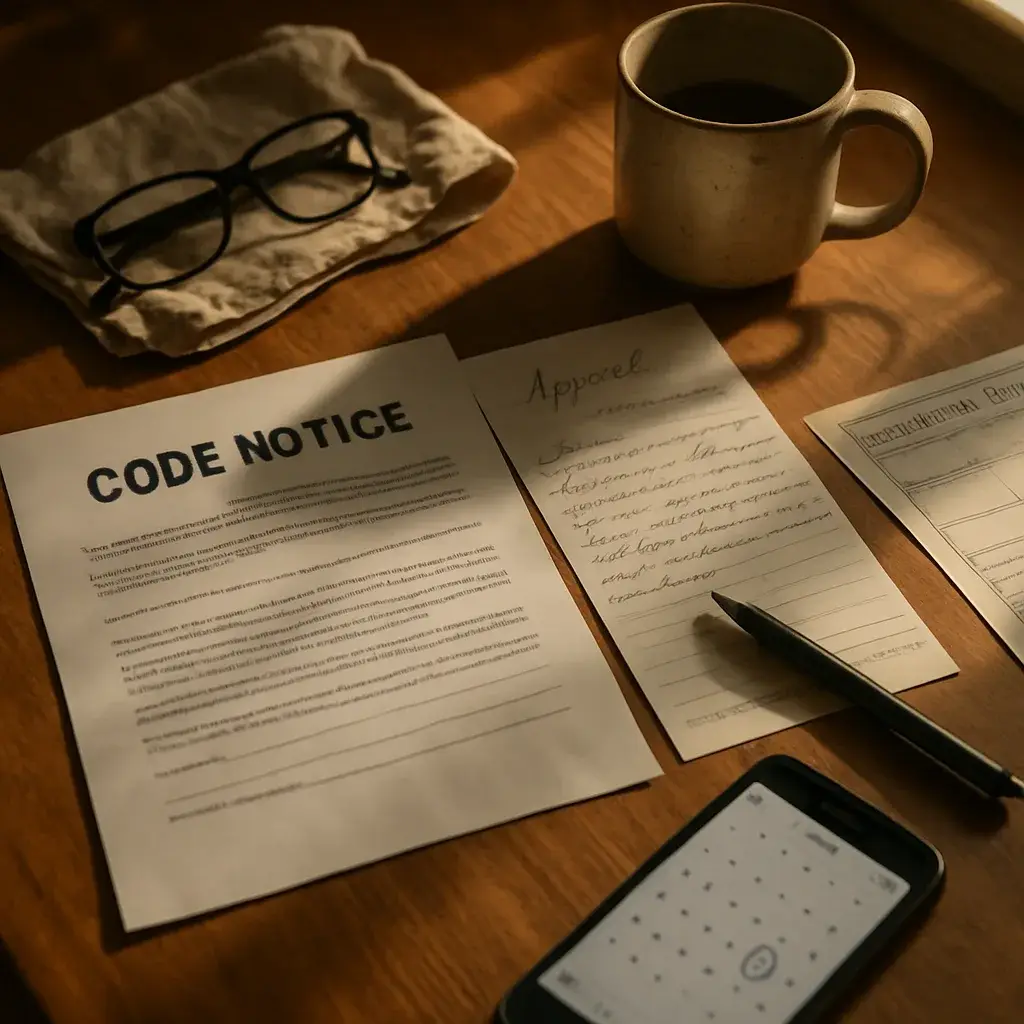
Fighting a code violation notice in Huntsville follows a fairly set process. Most owners we’ve talked to didn’t know these steps existed until they were already deep in the notice. Once you understand the order of things, it feels a lot less scary.
- Read the notice closely and write down the deadline. Huntsville code enforcement usually gives you a set number of days to fix the issue or respond, so don’t guess at the date.
- Call the code enforcement officer listed on the notice. Ask exactly what triggered the violation and whether a short extension is possible.
- Gather your evidence. Photos, repair receipts, contractor quotes, and even old inspection reports can help show you’re already working on the problem.
- File a written appeal or request a hearing through the City of Huntsville’s process before your deadline passes. Missing this window often means losing your right to appeal.
- Attend the hearing and bring your documents. Speak plainly about your situation, whether it’s an inherited house, a vacant property, or a repair that’s still in progress.
- Ask for a reasonable timeline if the violation is valid. Boards often grant extensions when they see a real plan in place.
- Follow up in writing after the hearing so you have a record of what was decided.
That fourth step trips up more people than any other. Owners think a phone call counts as an appeal, but it doesn’t. You need it in writing, and you need it before the deadline listed on the notice.
Here’s how that can play out. Say someone inherits a house and gets hit with a violation for overgrown grass and a sagging porch roof. They don’t have the cash for repairs, and the house sits vacant while the notices pile up. An appeal might get them a short extension, but the underlying problem doesn’t go away. The house still needs thousands in repairs they can’t afford.
An appeal can buy you time. It doesn’t fix a leaking roof, a failed septic line, or years of deferred maintenance.
So what happens if the repairs are just too big to tackle? This is where a lot of Huntsville homeowners start weighing other options. Some properties, especially older homes in Madison County or houses that sat vacant during a family estate process, have violations that would cost more to fix than the house is worth. In those cases, appealing the notice might only delay the inevitable.
You do have choices beyond fighting every notice yourself.
Every appeal case is different. But the process above gives you a solid starting point, whether you plan to fix the issue yourself or explore selling the property as-is instead.
What Happens If a Violation Goes Unresolved
Here’s the part nobody tells you when that notice shows up on your door. Code enforcement cases don’t just sit quietly waiting for you to catch up. And in Huntsville, the city has a set process it follows, step by step, whether you respond or not.
We’ve talked to homeowners who thought ignoring a notice would just make it go away. It never does. Instead, it moves forward on its own timeline.
- You get an initial notice with a deadline to fix the issue or respond.
- If nothing changes, the city issues a formal citation, sometimes with daily fines attached.
- Unpaid fines can turn into a lien against your property.
- Serious cases get referred to Huntsville Municipal Court, which can mean court dates and legal fees.
- In extreme situations, like a structure the city considers unsafe, Huntsville can order repairs or demolition and bill you for the cost.
That lien part is the one that trips people up the most. A lien attaches to the property itself, not just to you. So if you try to sell later, that debt has to get settled first, often at closing, which can eat into whatever money you were counting on.
Fines add up faster than most people expect, too. Some Huntsville violations, especially ones tied to overgrown lots, junk vehicles, or structural hazards, can accrue daily penalties. A few hundred dollars can turn into a few thousand in a matter of weeks.
Let’s say you inherited a house near Blossomwood from a relative, and it’s sat vacant for months. Maybe the yard got out of control, or a window’s been boarded up since a storm. A neighbor complains, the city sends a notice, and now you’re managing a property from out of state while a clock is ticking. We see this scenario more than people realize.
Court involvement is where things get real for a lot of owners. Missing a court date can lead to additional penalties or a warrant in some cases. And once a judge is involved, you’re no longer just dealing with a city inspector, you’re dealing with the legal system.
The good news is that most of this can be avoided or slowed down with the right response early on. But once a violation snowballs into liens, court dates, and mounting repair demands, a lot of owners realize the property has become more stressful than it’s worth holding onto.
That’s often when selling starts to look like the simplest way out.
Frequently Asked Questions
You’ll usually get a written notice mailed to the property address or the owner’s last known address on file. If you inherited a house or own a rental, ask a neighbor to check the mailbox or call the code enforcement office directly. Some violations start with a neighbor complaint, others from a routine drive-by inspection. If you’re unsure, don’t wait for a second notice. Reach out early so you understand what’s being flagged before a deadline passes.
A code violation is a specific fix, like overgrown grass or a broken window, while a condemned property is declared unsafe to live in entirely. Most violations start small and stay small if you respond by the deadline. Condemnation usually happens after months or years of unresolved issues, or after major structural failure. If your property has multiple violations stacking up, it’s worth acting before things escalate that far.
You can absolutely handle the appeal process yourself, especially for smaller issues like a leaning fence or peeling paint. But when repairs are too costly, or the property sat vacant during probate or a family estate process, an appeal may only delay things. In those cases, it helps to see how we buy code violation properties, since selling as-is can sometimes make more sense than sinking money into repairs you can’t recover.
Older homes near downtown Huntsville or in neighborhoods like Five Points often show wear from age, not neglect. Original siding, aging roofs, and outdated additions can trip city code even when the owner has done nothing wrong. Madison County also has a high number of inherited homes that sit vacant for months, giving small problems time to grow. If your property is older, expect more scrutiny during routine inspections.
Yes, this is one of the most common mistakes homeowners make. A phone call does not count as a formal appeal in Huntsville’s process. You must submit something in writing or request a hearing before your deadline passes, or you risk losing your right to appeal entirely. Calling first is smart for clarifying details, but always follow up with a written request to protect your case.
This happens often with older Madison County homes and vacant properties left over from probate or family estates. An appeal can buy you extra time, but it won’t fix a failing roof or years of deferred maintenance. Many owners in this situation choose to sell as-is instead of pouring money into repairs that won’t pay off. It’s worth exploring your options before committing to costly fixes you may not recover financially.
- We Buy Houses As-Is
- Locally Owned and Operated
- 30 Years Buying Houses in Madison County
- Fair Cash Offers, No Obligation
Related Help for Huntsville Homeowners
If this sounds like your situation, these pages can help:
- We buy houses with code violations in Huntsville
- Does Alabama Have Code Enforcement? What Huntsville Residents Should Know in 2026
- What Happens If You Don’t Fix a Code Violation in Huntsville, AL?
- The Most Common Code Violations in Huntsville, AL (2026 List)
- Why Do Vacant Houses Deteriorate So Quickly? A Huntsville Owner’s Guide (2026)
- How our home buying process works