Does Alabama Have Code Enforcement? What Huntsville Residents Should Know in 2026
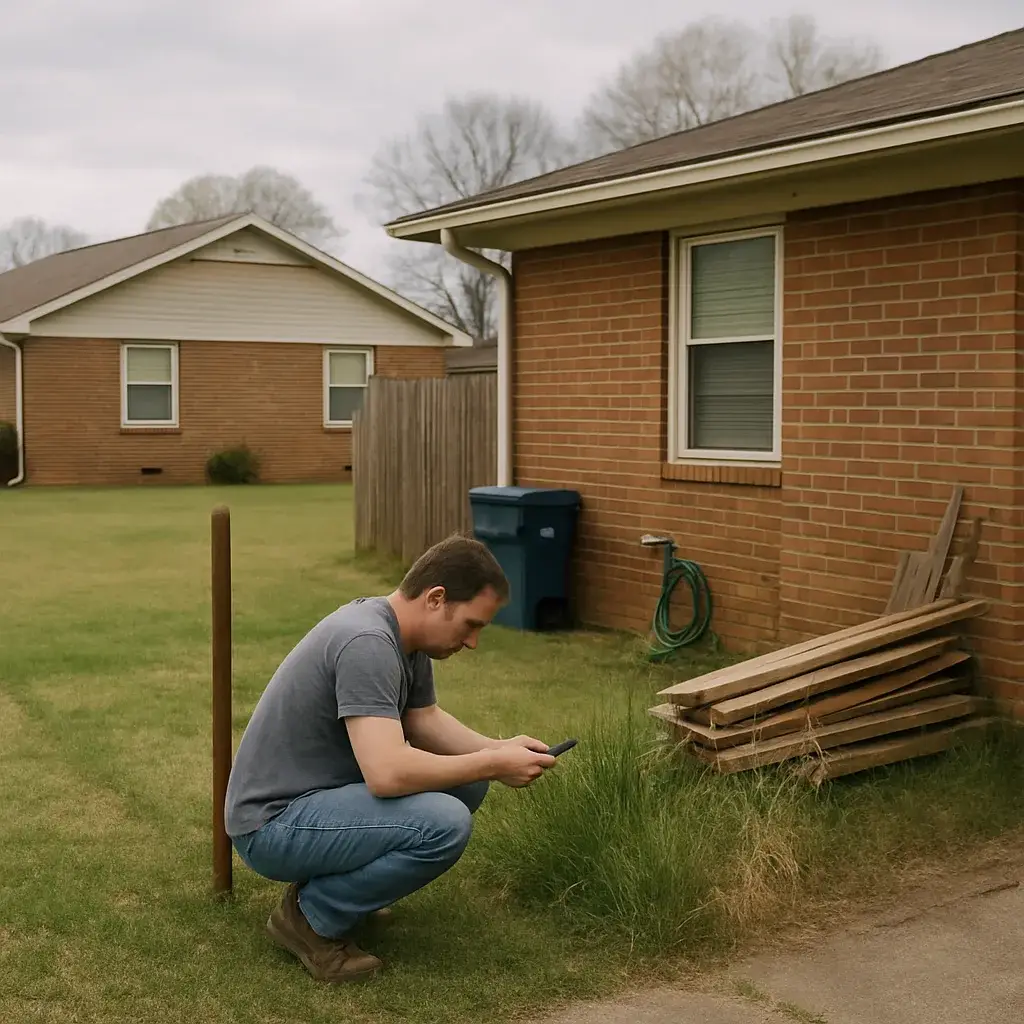
Why This Question Isn't as Simple as Yes or No
People search Does Alabama Have Code Enforcement? What Huntsville Residents Should Know in 2026 because they expect a simple yes or no. But Alabama’s setup doesn’t work that way. There’s no single state agency knocking on doors checking gutters and grass height. Code enforcement power comes from local government, not the state capitol.
Huntsville has its own code enforcement division, and Madison County has separate rules for unincorporated areas. That means a rundown house on one street inside city limits might get a violation notice, while a similar house just outside city limits might not. We’ve talked to homeowners who were surprised to learn their county property wasn’t covered under Huntsville’s ordinances at all.
So why does this matter to you? Because the rules that apply to your property depend on a few specific factors, not a blanket state law.
- Whether your property sits inside Huntsville city limits or unincorporated Madison County
- Whether your neighborhood has an HOA with its own separate standards
- Whether the issue involves structural safety, which triggers building code rules instead of general nuisance codes
- Whether the property is vacant, which can bring extra scrutiny in some areas
- Whether a neighbor or passerby has already filed a complaint
Here’s a scenario we see often. A family inherits a house from a parent who lived there for decades. The yard grows out, paint peels, and a window cracks. Nobody’s living there to notice or fix it. Weeks later, a letter shows up from the city. The family didn’t do anything wrong, they just didn’t know the house was on anyone’s radar.
That’s the part most people miss. Code enforcement isn’t about punishing anyone. It’s about keeping neighborhoods stable.
And once you understand it’s local, not statewide, the next question becomes practical. What exactly triggers a violation notice, and what happens if you can’t fix the problem fast enough? We’ll cover both. But if you already have a notice on an inherited or vacant house, you don’t have to wait to act.
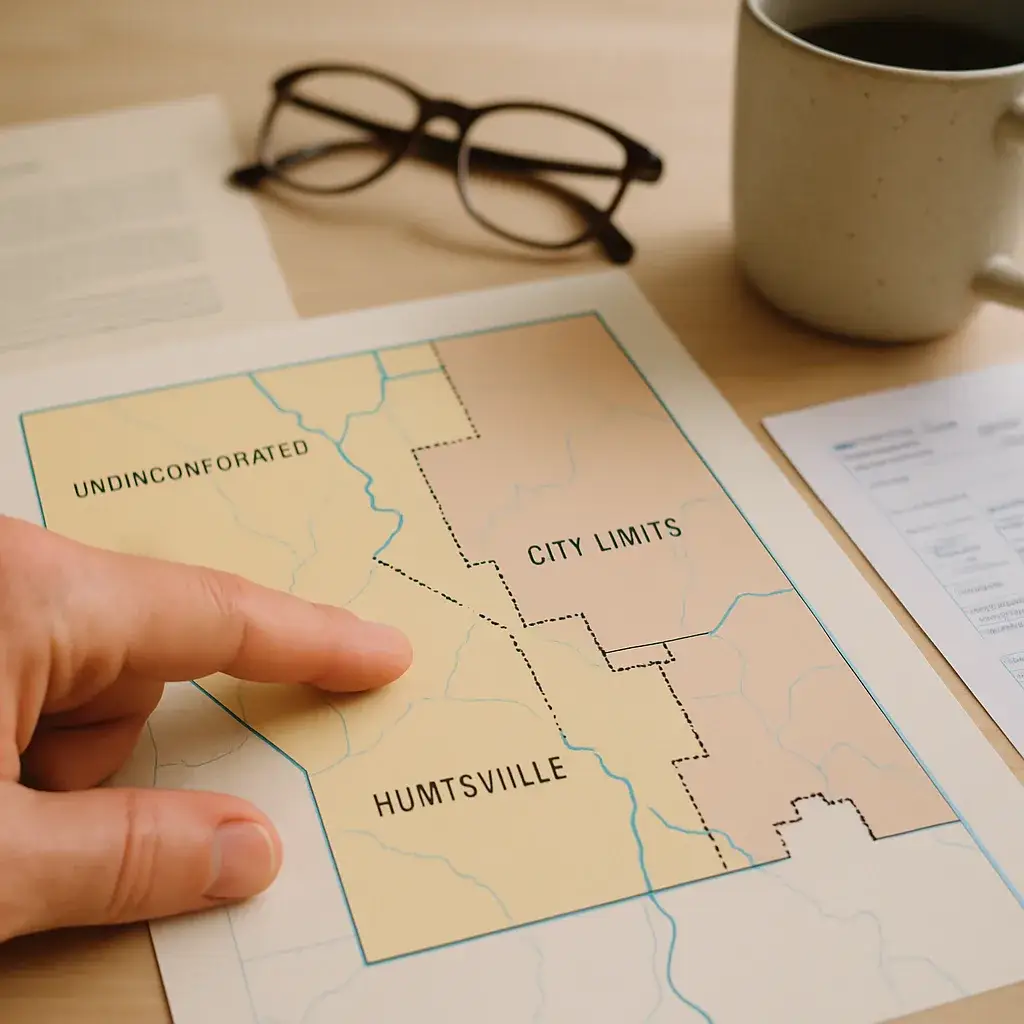
City Limits vs. Unincorporated Madison County: Why It Changes Everything
Here’s something a lot of folks don’t realize until they get a letter in the mail. Where your house sits on the map decides who can knock on your door about code violations. Huntsville has its own code enforcement department. Madison County, outside the city limits, works differently. And that difference matters more than you’d think.
Inside Huntsville city limits, code enforcement officers can cite you for tall grass, junk cars, peeling paint, or a roof that’s falling apart. The city has inspectors who drive neighborhoods and respond to complaints from neighbors. We’ve talked to homeowners who had no idea a complaint had even been filed until a notice showed up on their door.
Unincorporated Madison County is a different story. Alabama law limits what counties can enforce outside city limits. So county rules focus mostly on health and safety hazards, not looks.
So what does this mean for you? If your house is inside Huntsville, you’re more likely to face enforcement action for things like overgrown lots, exterior damage, or a vacant property that’s started to look abandoned. If you’re out in the county, say in unincorporated parts of Madison County, the pressure is usually lower, but it’s not zero. Serious hazards like unsafe structures or sewage issues can still bring county health officials or the state into the picture.
- Huntsville city limits: broader code enforcement covering grass height, exterior condition, junk vehicles, and vacant property upkeep
- Unincorporated Madison County: enforcement generally limited to serious health and safety hazards
- Annexed areas near Huntsville’s edges can shift from county rules to city rules without much notice
- Rental and inherited properties near city borders often confuse owners about who has jurisdiction
We see this mistake all the time. Someone inherits a house from a relative, assumes it’s out in the county because that’s how it felt growing up, and finds out later the city annexed that street years ago. Annexation happens quietly in Huntsville as the city grows outward into Madison County. A property that was once free of city code rules can end up under them without the owner knowing the map changed.
If you’re not sure which side of the line your house falls on, that’s a real problem to sort out before violations pile up.
This is exactly the kind of situation where knowing your options matters. If you’ve got a property with code issues, tall grass complaints, or repairs you can’t keep up with, whether it’s in city limits or the county, you don’t have to fix everything before you sell.
How Code Enforcement Works in Huntsville
Huntsville handles code enforcement through its Community Development department, and Madison County has its own process for unincorporated areas. Yes, Alabama does have code enforcement, and Huntsville uses it actively to keep neighborhoods safe and livable. But the way it plays out on the ground is a lot less scary than most homeowners expect. It’s a process, not a punishment.
Most cases start with a complaint. A neighbor calls in about tall grass, or an inspector spots a sagging porch roof while driving through a neighborhood off Bob Wallace or Pulaski Pike. From there, the city follows a fairly predictable path before anything gets serious.
- An inspector documents the issue with photos and notes.
- The city mails a written notice to the property owner listing the violation.
- You’re given a deadline, often 10 to 30 days, to fix the problem.
- If nothing changes, the city may issue a citation or schedule a hearing.
- Unresolved violations can lead to fines that add up daily, or in rare cases, the city hires a contractor and bills you for the work.
We’ve talked with homeowners who didn’t even know a notice existed. It got mailed to an inherited house nobody was checking, or a rental where the tenant never passed the letter along. That’s one of the most common ways things spiral, not because the owner ignored it, but because they never saw it in the first place.
Here’s the part people don’t realize until it’s too late: fines in Huntsville can stack up fast, and liens attached to a property don’t just disappear. They follow the house through a sale. A vacant property near Five Points with overgrown vines and peeling paint can rack up violations for months before anyone in the family even notices.
So what triggers the more serious stuff? Usually it’s neglect over time, not a single bad week. Structural damage, unsecured doors, mold from a leaky roof, hoarding conditions inside, these are the things that turn a warning letter into a real legal headache.
Fire-damaged homes and long-vacant properties tend to draw attention fastest. An empty house is easy to spot from the street.
We’ve walked houses across Madison County where the violation notice was the first sign the family knew the house needed help. Once fines and liens are attached, most owners feel stuck. They either spend money they don’t have on repairs, or watch the fines keep growing.
That’s when people start looking for a faster way out, one that doesn’t mean fixing a roof or clearing out decades of belongings first.
Frequently Asked Questions
You can check with the Huntsville Community Development department or look up your address on the city’s mapping tools. This matters because annexation happens quietly as Huntsville grows outward into Madison County. A property that once sat outside city rules can end up covered without any notice. If you’re unsure, don’t guess, since this affects what code rules apply to your house and what happens if violations pile up.
Most cases start with a complaint from a neighbor or an inspector noticing an issue while driving through a neighborhood. Tall grass, junk cars, peeling paint, and sagging roofs are common triggers inside city limits. Vacant homes often get flagged even faster since neighbors notice unattended yards quickly. If you’ve inherited a property or don’t live there full-time, it helps to check in regularly so small issues don’t turn into notices.
Yes, that’s a common misconception, and it can catch homeowners off guard. Unincorporated Madison County has narrower rules than Huntsville, but serious hazards like unsafe structures or sewage problems can still bring in county health officials or the state. So county property isn’t a free pass. If you’ve got a property with issues you’re unsure about, it’s worth understanding your options before problems grow bigger.
Not necessarily. You don’t have to fix everything before you sell, especially with an inherited or vacant property that’s racked up violations. Many owners spend time and money on repairs when a simpler path exists. If a house has tall grass complaints, exterior damage, or repairs you can’t keep up with, it helps to talk through your situation first rather than assuming full repairs are required.
Yes, an HOA can have separate standards that go beyond what Huntsville’s code enforcement requires. Your neighborhood association might fine you for things the city wouldn’t cite, like paint color or fence style. This means you could face two sets of rules at once, city code and HOA rules. Knowing which one applies to your specific violation helps you respond correctly instead of guessing.
Cities typically give you a deadline, but if repairs are too costly or you don’t have time, options still exist beyond fixing everything yourself. This is especially true for inherited homes or properties with structural issues. Instead of waiting on a slow repair process, talk to us about your property so you understand what selling as-is could mean for your timeline and stress level.
- We Buy Houses As-Is
- Locally Owned and Operated
- 30 Years Buying Houses in Madison County
- Fair Cash Offers, No Obligation
Related Help for Huntsville Homeowners
If this sounds like your situation, these pages can help:
- We buy houses with code violations in Huntsville
- What Happens If You Don’t Fix a Code Violation in Huntsville, AL?
- The Most Common Code Violations in Huntsville, AL (2026 List)
- What Is a Code Violation Notice in Huntsville, AL? (2026 Explainer)
- Why Do Vacant Houses Deteriorate So Quickly? A Huntsville Owner’s Guide (2026)
- How our home buying process works