
Fire-Damaged House in Huntsville: Repair It or Sell As-Is?
A fair cash offer within 24 hours of our visit, from a local buyer with 30 years of experience. We buy houses in any condition.
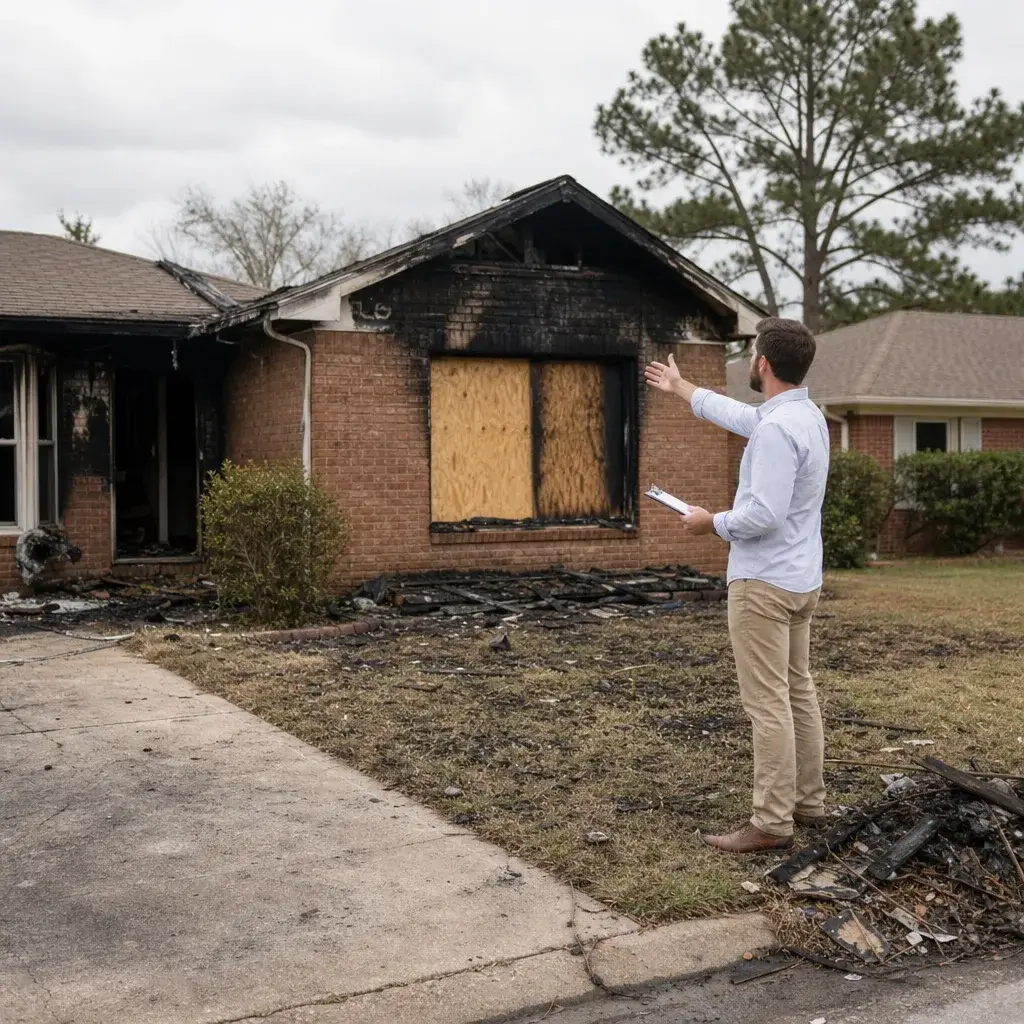
Selling a Fire-Damaged House As-Is Is the Main Decision
Fire-damaged house buying in Huntsville is for homeowners looking at a burned, smoky, or water-soaked house who have to make one big choice. Do you fix it first, or sell it as-is? For a lot of people, selling as-is to a cash buyer is the simpler path because you skip the repairs, the cleanup, and the months of waiting. But it’s not the right call for everyone, and we’d rather tell you that up front.
Fixing it first usually means more than one burned room. Smoke and soot can travel into walls, attics, and air ducts. The water used to put out the fire can soak floors and drywall. Wiring near the damage may need to be checked. Work like this often takes contractors, permits, and inspections before the house can go on the market. All the while, you’re still paying the mortgage, taxes, and insurance on a house you may not be able to live in.
Fixing first and listing the house may make more sense if:
- The damage is small, like one room or part of the kitchen.
- Your insurance payout covers the repairs.
- You have the time and energy to manage contractors.
- You’d like to list with a Realtor and aim for full market value.
If that’s you, repairing may put more money in your pocket. A good local Realtor can help you weigh it, and we’re always glad to work alongside one.
Selling as-is often makes more sense if:
- The fire caused major or structural damage.
- Insurance won’t cover all the repairs.
- You’re paying for this house and somewhere else to live at the same time.
- You inherited a damaged house you never planned to manage.
- You’re worn out and just want it settled.
We want to be honest about price. Our cash offer depends on the property’s location, condition, size, comparable home sales, market demand, needed repairs, cleanup costs, and estimated resale value. Major fire, water, or structural damage may lower the offer. What you get in return is a sale with no repairs or cleaning required. Jason has 30 years of experience buying houses in Huntsville and Madison County. His background in home building and construction helps us understand fire repairs and permitting, so our offer is based on the real work the house needs, not a guess.
Here’s what selling to Huntsville House Buyer AL includes. You get a free, no-obligation property review and cash offer and a flexible closing date. We pay all closing costs, and a closing attorney handles the closing. Any mortgages, liens, back taxes, or title issues are reviewed and explained before you sign the purchase agreement. We’ll give you a written cash offer within 24 hours of our visit. If we don’t, we pay you $250. If closing is late because of us, we pay you $100 per day.
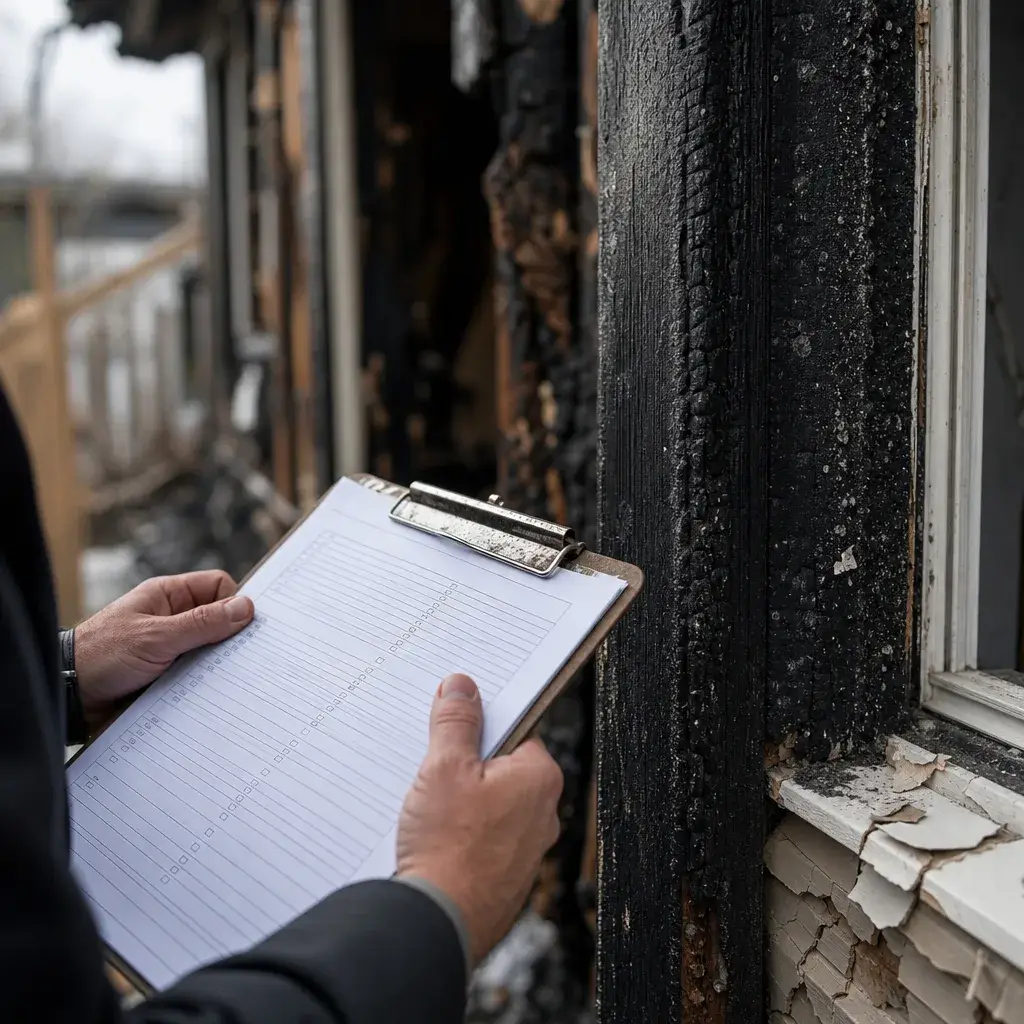
Mortgages, Liens, and Back Taxes Don't Stop a Sale
A lot of people think they can’t sell a burned house if they still owe money on it. That’s usually not the case. Owing money on a house is normal, and a cash sale can still work. Here’s how it generally plays out.
Start with the mortgage. When a house sells, the loan gets paid off out of the sale price at closing. The closing attorney gets a payoff amount from your lender, and the lender is paid before any money comes to you. You don’t have to pay off the loan first or find the cash somewhere else. If money is left over after the payoff, it’s yours.
A fire adds one wrinkle. If you filed an insurance claim, your mortgage company may be named on the check, because they have a stake in the house too. It helps to know where your claim stands and what’s already been paid out. Keep your claim paperwork handy, even if the claim isn’t settled yet, so everyone can see the whole picture.
Other debts can be tied to the house, too. These are the ones that tend to come up after a fire:
- Back property taxes. Unpaid taxes stay with the house, not with you as a person. They’re normally paid out of the sale at closing.
- Contractor liens. If a board-up, cleanup, or repair company did work and wasn’t paid, they may have filed a lien. Liens like this are usually paid at closing as well.
- Second mortgages or home equity loans. These get paid off from the sale the same way the first mortgage does.
- City code notices. A burned house sitting empty can draw code violation notices. We also buy code violation properties, so an open notice doesn’t have to hold things up.
Now the hard case. After a big fire, a house can be worth less than what’s owed on it. When that happens, the sale price may not cover every debt. Sometimes insurance money fills the gap. Other times the lender has to agree to take less than the full balance, often called a short sale. That needs the lender’s approval and usually takes longer. If the numbers don’t work, we’d rather tell you plainly than let you find out at the closing table.
If you’ve fallen behind on payments since the fire, don’t wait too long to talk to someone. We also buy pre-foreclosure homes, and you have more choices the earlier you look at them.
Inherited houses add one more step. Someone has to have the legal right to sell before any lien can be paid off, and that sometimes means going through probate first. That’s one reason selling inherited and fire-damaged problem properties can take a little more paperwork than a normal sale. We buy probate properties, so a house that’s still tied up in an estate isn’t a dead end.
The point is that debt doesn’t lock you into a house you can’t live in. Since every mortgage, lien, and tax bill gets reviewed and explained before you sign, you’ll know where the money goes before you agree to anything. And because we pay all closing costs, those fees don’t come out of your share.
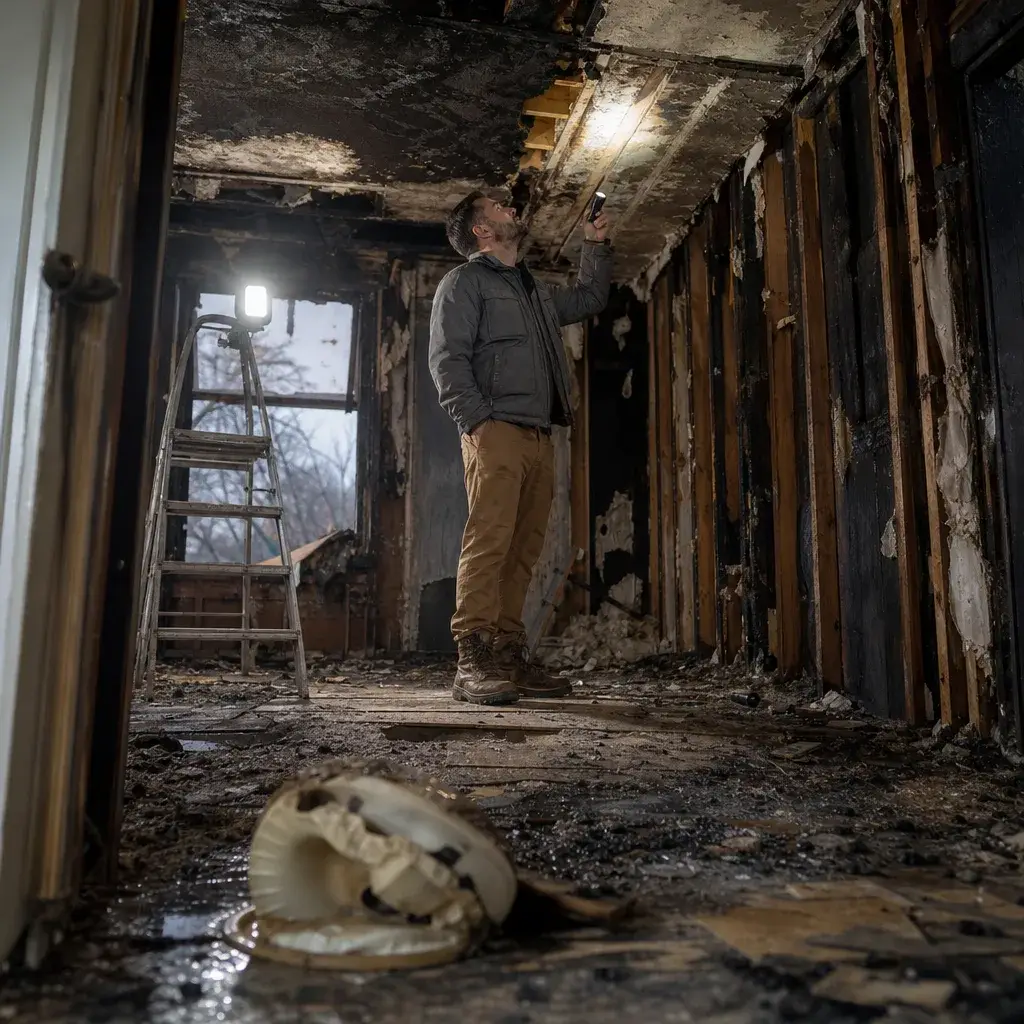
What Happens During the Property Review and Cash Offer
It starts with a phone call to 256-858-7464 or a note through huntsvillehousebuyeral.com. We’ll ask a few simple questions about the house and set a time to see it. Jason, our founder, is the one who meets with you and gives you the offer. You won’t be handed off to someone you’ve never talked to.
You don’t need to get the house ready. Please don’t scrub soot off the walls, haul out burned furniture, or pay someone to tear out wet drywall before we come. We buy as-is, with no repairs or cleaning required. We need to see the house the way it is. Cleaning up first just costs you time and money you won’t get back.
A few papers can help if you have them. None of these are required to get an offer, but they make the picture clearer:
- Your insurance claim number and your adjuster’s name, even if the claim is still open
- The fire department report, if you’ve received it
- A recent mortgage statement or your lender’s contact info
- Any letters about liens, back taxes, or city code notices
- For an inherited house, any estate or probate papers you have so far
If you can’t find something, that’s okay. Bring what you have and we’ll go from there.
Here’s how the timing works. We give you a written cash offer within 24 hours of our visit. The 24 hours start when we see the property, not when you first call. That way the offer is based on the actual house and not a guess over the phone. And as you read above, we put money behind that promise.
The offer comes in writing so you can sit with it. Take it home. Show it to your family, your attorney, your insurance adjuster, or your Realtor if you have one. Hold it up against the repair quotes you’ve gotten. We won’t push you to sign on the spot, and we won’t call every day asking if you’ve decided. After a fire, you’ve had enough pressure.
If you say yes, you pick the closing date. Some people want it done in a hurry because they’re paying for two places to live. Others need a little time to sort out insurance or clear out what’s left. A flexible closing date lets you plan around your life, not ours. The buyer on your contract is Huntsville House Buyer AL LLC, an Alabama LLC, and a closing attorney handles the closing. We pay all closing costs.
We buy houses in Huntsville and Madison County only. That’s where Jason has spent 30 years buying houses, and his background in home building and construction is why he can look at a burned house and see the real work it needs.

How Fire Damage Affects the Cash Offer
Fire damage almost always lowers what a house sells for, whether you sell it to us or to anyone else. A cash buyer taking on a burned house is also taking on the repairs, the cleanup, and the time it takes to make the home livable again. The offer reflects that work. When you know which parts of the damage carry the most weight, the number makes more sense when you see it.
Here’s how cash buyers generally look at a fire-damaged house. They start with what the home could sell for once it’s fully repaired. Then they subtract what it’ll cost to get there. That includes tear-out, cleanup, rebuilding, permits, and the months the house sits while work gets done. What’s left shapes the offer. That’s why two houses on the same street can get very different offers after a fire.
Not all fire damage weighs the same. These are the things that tend to move the number the most:
- How far the fire spread. A stovetop fire that scorched one kitchen wall is a much smaller job than a fire that ran up into the attic.
- Structural damage. Charred roof framing, floor joists, or load-bearing walls have to be opened up, checked, and often replaced. This is usually the biggest cost.
- Smoke and soot. Smoke doesn’t just sit on the walls. It works into insulation, ductwork, and the inside of wall cavities. Getting rid of the smell can mean replacing ducts and insulation even in rooms that never burned.
- Water damage. The water used to fight the fire soaks subfloors, drywall, and cabinets. Wet materials left too long can grow mold, which adds another layer of work.
- Electrical. Wiring that got hot may need to be replaced and inspected before the power can safely go back on.
- Permits and inspections. Rebuilding usually means permits and inspections, and both add time and cost.
- Debris and contents. Burned furniture, ruined belongings, and torn-out materials all have to be hauled away.
So what should you compare an as-is offer against? Not what the house was worth before the fire. That number is gone, and measuring against it will only make you feel worse. Compare it to what you’d likely walk away with if you fixed the house first. That’s the after-repair sale price, minus any repair costs your insurance won’t cover, minus the mortgage, taxes, and insurance you’d keep paying during the work, minus the costs of selling once it’s done.
Sometimes fixing first comes out ahead, and if it does, that’s worth knowing. Other times the as-is offer lands close enough that skipping months of contractors and stress is the better trade. You can only tell by putting the two side by side with real numbers, not hopes.
If you’ve already got estimates from contractors or your adjuster, keep them handy. When you get our written offer, ask us how the damage factored in. You deserve to understand the number before you decide anything, and we’d rather you say no with clear eyes than say yes while feeling unsure.
Working Around an Open Insurance Claim
You don’t have to wait for your insurance claim to close before you ask for an offer. Your adjuster may still be working on numbers while you’re trying to figure out what to do with the house. The claim and the sale are two separate things, but they affect each other, so it helps to know how before you sign anything.
The biggest question is what happens to the insurance money if you sell. The answer depends on your policy and where the claim stands. Most homeowner policies split fire coverage into a few parts, and each one can work differently when the house is sold:
- Coverage for the house itself. This pays for damage to the structure. Selling may change how or when this part gets paid, so ask your insurer before you agree to a sale.
- Coverage for your belongings. This pays for furniture, clothes, and other things the fire ruined. It usually follows you, not the house.
- Living expense coverage. This helps pay for a hotel or rental while you can’t live at home. Ask how long it lasts and whether a sale ends it.
There’s one detail that catches a lot of people off guard. Many policies first pay what’s called actual cash value, which is the cost to repair minus wear and age. The rest is often held back until the repairs are done. If you sell without rebuilding, you may not get that held-back money. Ask your adjuster for the exact amount in writing. That number belongs in the fix-first versus sell-as-is comparison from the last section, because it can change which choice comes out ahead.
Before you sign a purchase agreement, call your insurance company and ask:
- If I sell before my claim closes, what happens to the payment for the house?
- How much money is being held back until repairs are done, and can I get any of it if I don’t rebuild?
- Does selling end my living expense coverage, and on what date?
- Has any claim money already gone to my mortgage company?
- Do I need to tell you before I sign a contract to sell?
Write down who you talked to and what they said. And don’t rush to accept a settlement or sign away your rights to the claim just to move faster. If the policy language is confusing, an attorney can read it with you.
Say your adjuster has come out twice, there’s still no final number, and you’re paying rent on top of a mortgage. You don’t have to choose between waiting and guessing. You can get our written offer now and hold it next to whatever your insurer tells you. The visit is free, with no obligation, so having our number in hand doesn’t commit you to anything. It just gives you real numbers to compare.
Frequently Asked Questions
Usually not until it’s been checked by a professional. Smoke and soot can get into the air ducts and walls, and wiring that got hot may not be safe until it’s inspected. Water used to fight the fire can also soak into floors and drywall, which can lead to mold if it sits too long. If you’re not sure your house is safe, that’s one more reason a quick property review can help you figure out your next step.
Yes, almost always, whether you repair it or sell it as-is. The amount it drops depends on how far the fire spread, whether it hit structural parts like roof framing or load-bearing walls, and how much smoke and water damage spread into unburned rooms. A small kitchen fire affects value far less than one that reached the attic or framing. That’s why we look at the real damage during our visit instead of guessing from a phone call.
Your mortgage doesn’t go away, and payments are still due even if you can’t live in the house. If you sell, the loan gets paid off out of the sale price at closing, and the closing attorney gets the exact payoff amount from your lender. Any money left over after the mortgage, taxes, and other debts are paid is yours. If you’ve fallen behind on payments since the fire, it helps to look at your options sooner rather than later.
- We Buy Houses As-Is
- Locally Owned and Operated
- 30 Years Buying Houses in Madison County
- Fair Cash Offers, No Obligation
Related Help for Huntsville Homeowners
If this sounds like your situation, these pages can help: