
Do You Lose Money Selling a House As-Is in Huntsville?
On this page
- What “Selling As-Is” Means
- Why “Losing Money” Depends on What You Compare It To
- Selling As-Is vs. Fixing Up and Listing: A Side-by-Side Look
- Running the Numbers on a Huntsville House
- Why Property Condition and History Don’t Disqualify a House
- What Drives a Cash Offer Up or Down
- When Selling As-Is Isn’t the Right Move
- Frequently Asked Questions
What "Selling As-Is" Means
Sometimes you do, and sometimes you come out ahead. It depends on what the repairs would really cost you, how long the house would sit, and what you’d pay along the way. I’ve bought houses in Madison County for 30 years, and the honest answer comes from running those numbers on your house, not a national average.
Here’s the simple version. You sell the house in the shape it’s in today. You don’t fix the roof. You don’t replace the old furnace. You don’t paint over the water stain in the hallway. The buyer looks at the house, sees what’s there, and makes an offer based on that.
No repair list. No last-minute contractor calls.
In a regular sale, things work differently. A buyer’s inspector finds problems, then the buyer asks you to fix them or knock money off the price. That back-and-forth can drag on for weeks, sometimes the deal falls apart at the very end. An as-is sale skips most of that.
So what does as-is cover? It usually means a few things for you as the seller:
- You won’t make repairs before closing, big or small.
- The buyer takes on the cost and work of any fixes after the sale.
- Repair requests after an inspection are mostly off the table.
- You can often leave behind old furniture, junk, or stuff you don’t want.
That last point surprises a lot of people. We’ve bought homes in Huntsville where the family left a full garage of tools and boxes behind. They didn’t have the time or energy to clear it out, and that was fine with us.
Now for what as-is doesn’t mean. It isn’t a free pass to hide problems you know about. If the basement floods every spring, you still need to be honest about that. Alabama has its own rules on what sellers have to share, and a local real estate attorney can walk you through them. Being upfront protects you. It also builds trust with the buyer.
And as-is doesn’t mean you’re giving the house away. That’s the myth that scares people most.
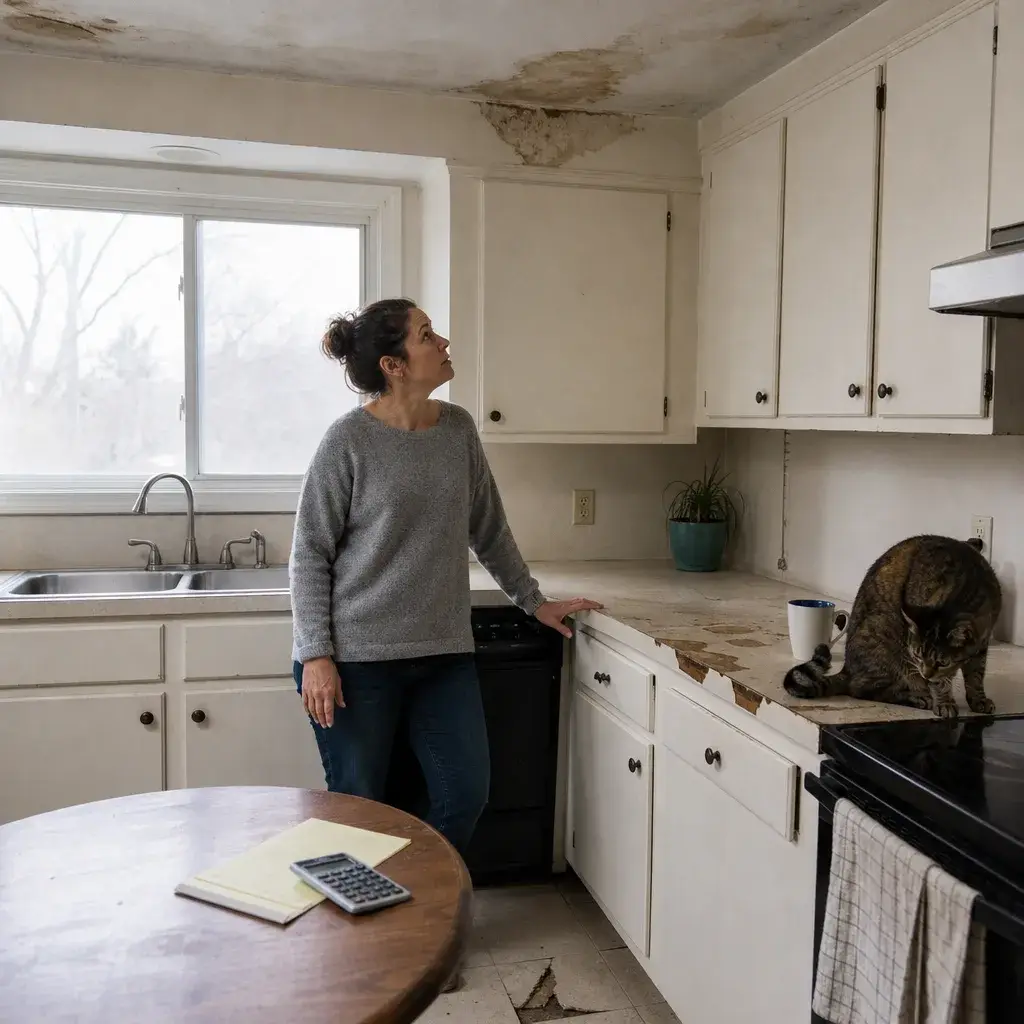
Think about a scenario we see often. A woman inherits her dad’s house off Governors Drive. The kitchen hasn’t been touched in 40 years. The HVAC is shot. She lives three states away and can’t manage a remodel from there. Fixing it up would mean months of travel, contractor headaches, and money she doesn’t have sitting around –
So she sells as-is. The offer reflects the repairs the buyer will need to make. But she also skips the repair costs, the carrying costs, and the months of stress. Did she lose money? Not really, once you add up what she didn’t have to spend.
That’s the part most people miss.
As-is is a trade. You give up some of the top-dollar price in exchange for speed, certainty, and zero repair work. Whether that trade makes sense depends on your house and your situation. For many of the families we work with, it’s the clear winner.
Why "Losing Money" Depends on What You Compare It To
Here’s the thing most people miss. “Losing money” isn’t a fixed number. It changes based on what you hold it up against.
Most sellers compare an as-is offer to the price a fully fixed-up house might list for. That feels fair. But it’s not a true comparison, because that list price isn’t what lands in your bank account.
A better question is simple. What would you keep?
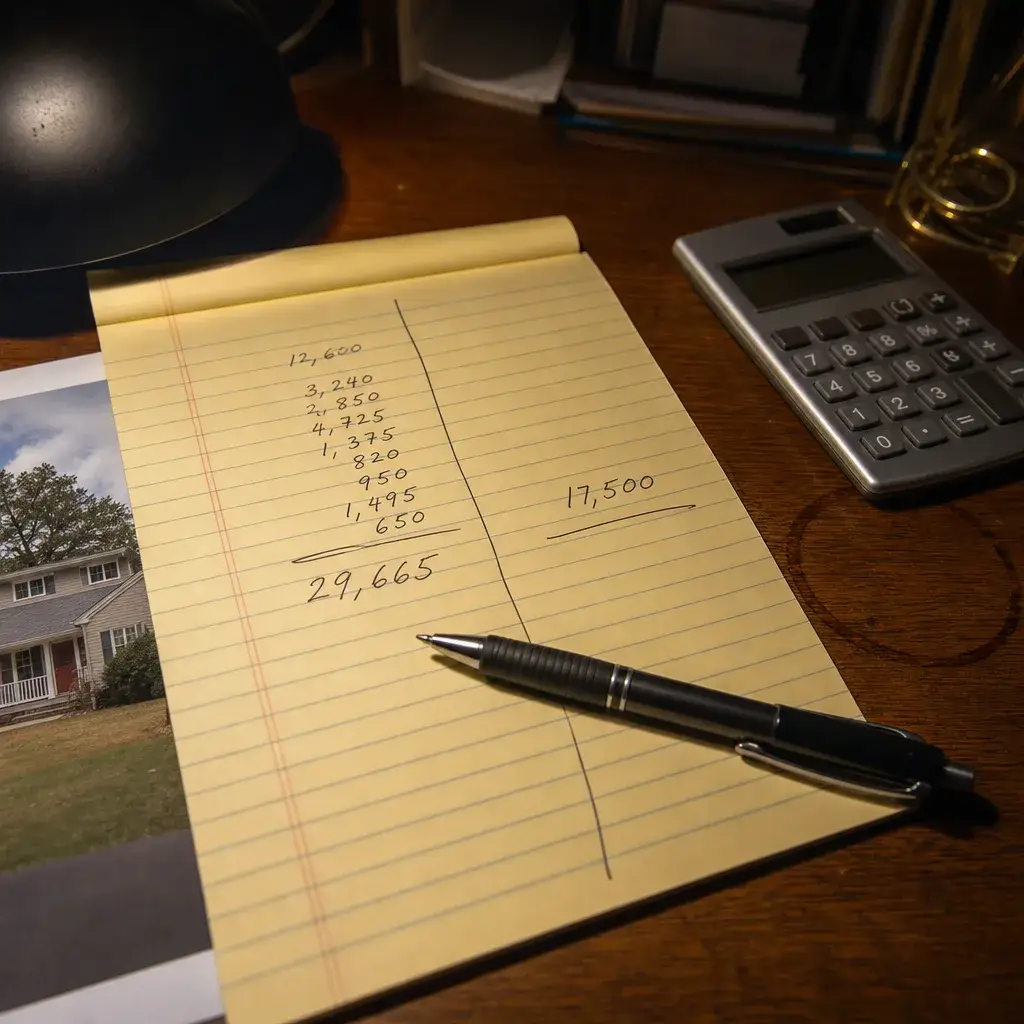
Look at it as list price vs. net proceeds. The list price is the big number on the sign out front. Net proceeds are what’s left after every bill gets paid. The gap between those two can be wide, and it’s often wider than people expect.
Selling the traditional way usually comes with costs that don’t show up until you’re deep into the process. We see sellers get surprised by these all the time:
- Repairs a buyer’s inspector finds, like an old roof or a failing HVAC unit
- Mortgage, taxes, insurance, and utilities you keep paying while it sits on the market
- Cleaning, staging, and yard work to make the house show well
- Repair credits a buyer asks for after the inspection
None of these is huge by itself. Stacked together, they eat into that big list price fast.
Time matters too. Every month a house sits empty is another month of payments with nothing coming back. Huntsville summers are hot and humid, and a vacant house with a weak AC or a damp crawl space can pick up new problems while you wait. Mold. Sagging floors. Pests.
Let me share a quick example. We once talked with a woman who’d inherited her dad’s older brick ranch near Five Points. She got a quote for the repairs a retail buyer would want, and it rattled her. She’d have to front the money, manage the contractors, and still pay the bills on two houses for months. Once she wrote down what she’d keep after all of it, the as-is offer didn’t look like a loss anymore, it looked like the smarter move for her family.
That’s not true for everyone. And we’ll be the first to say it.
If your house only needs fresh paint and you’ve got time to wait, listing it may put more in your pocket. But if it needs a new roof, has foundation trouble, or is tied up in probate, the math often flips. Most of the houses we buy in Huntsville fall into that second group, where repairs and waiting cost more than the seller wants to risk.
So the honest answer depends on your starting point. Compare an as-is offer to the perfect-world list price, and yes, it’ll look lower. Compare it to what you’d really net after repairs, fees, and months of carrying costs? The difference shrinks. Sometimes it disappears completely.
Our tip from years of walking through homes in Blossomwood, Five Points, and south Huntsville is this: put both options on paper side by side before you decide.
Selling As-Is vs. Fixing Up and Listing: A Side-by-Side Look
Here’s the honest truth. Selling as-is doesn’t always mean you lose money. You skip one set of costs and accept a different tradeoff. The real question is which path leaves more in your pocket at the end.
Fixing up and listing first. You pay for repairs up front, out of your own savings. That might mean paint, a new roof, or a kitchen update. Then you list with an agent and wait. Most buyers need a loan, so an inspection and appraisal come next. If either one finds a problem, you’re back to fixing things. The final sale price can be higher. But you carry the house the whole time, and that adds up fast.
Most people don’t realize how many costs pile up while a house sits. Here’s what keeps running in the background:
- Your mortgage payment, every single month
- Property taxes and homeowners insurance
- Utilities to keep the lights on for showings
- Lawn care, since Huntsville grass doesn’t stop growing in summer
- Surprise repairs a buyer’s inspector finds late in the deal
None of these show up on the listing sheet. They still come out of your share.
Selling as-is is the other path. You skip the repairs. You skip the showings too. A cash buyer looks at the house the way it sits and makes an offer. That number is usually lower than a fully updated listing. But there are no repair bills and far fewer months of payments. You also pick your closing date.
We worked with a family who inherited a house near Five Points. It had old wiring and a roof near the end of its life. They got repair quotes and planned to list it. Then they did the math on six months of holding costs, the numbers told a different story. They chose to sell as-is and closed in a few weeks.
So how do you figure out which path makes sense for you? We walk sellers through the same simple steps every time.
- List what the house truly needs to pass a buyer’s inspection.
- Get rough repair quotes from a couple of local contractors.
- Guess how many months the repairs and the sale will take.
- Add up your monthly holding costs for that whole stretch.
- Subtract repairs, holding costs, and agent fees from the expected list price.
- Compare that number to a no-obligation as-is offer.
Step three is where people get tripped up. Contractors in Madison County stay busy, especially after storm season. A two-week job can turn into two months. And every month of delay eats into the money you thought you’d make. Then there’s the stress of strangers walking through your home each weekend, the last-minute cleaning, the –
Well, you get the idea.
We see this all the time with houses that need major repairs. The owner expects a big payday from fixing up. The real gain after costs ends up much smaller than they hoped. Sometimes it’s gone completely.
Fixing up still wins for some sellers. If your house only needs small cosmetic work and you’ve got time, listing can pay off. Not every house, though. Not every seller either.
See how to sell your Huntsville house as-is. Related guides: Is Selling As-Is a Good Idea? · Commission on a $300,000 House
Running the Numbers on a Huntsville House
Add up the costs of fixing the house and listing it:
- Repair and cleanup costs, including any open code notices from the City of Huntsville
- Months of mortgage, taxes, insurance, utilities and mowing while you fix it and while it sits on the market. Grass has to stay under 8 inches.
- Seller closing costs
- Repairs the buyer’s inspection turns up
Then compare that to a written cash offer with no repairs and no closing costs. We pay those. After Jason views the house, you’ll have that offer within 24 hours of our visit, so you can compare real numbers. See how we buy houses as-is.
Why Property Condition and History Don't Disqualify a House
A lot of folks call us sure their house is too far gone to sell. It isn’t. A house’s problems change the price, but they don’t decide whether you get an offer. We make fair offers on houses in any condition, and that’s not a line we save for the easy ones.
Here’s why that’s different from a typical sale. Many buyers on the open market need a mortgage. Lenders and appraisers often want a house in livable shape before they’ll sign off on a loan. A house with a burned-out kitchen, plumbing that doesn’t work, or a roof that’s failing can stall right there. We buy directly for cash, so there’s no lender in the middle deciding your house is too rough to finance.
These are the kinds of houses we buy as-is in Huntsville and Madison County:
- Fire-damaged houses, whether it’s smoke in one room or damage through most of the home. Jason’s background in home building helps him see past the soot to what’s there.
- Hoarder houses, even when you can’t walk through some rooms. You don’t need to clear a path or rent a dumpster first.
- Inherited and probate property. Estate paperwork doesn’t scare us off, and you don’t have to fix up a parent’s house you never planned to own.
- Pre-foreclosure and foreclosure situations, when you’re behind on payments and need to know your options.
- Houses with code violations, like a notice from the city about the yard, the roof, or an unsafe structure.
- Houses needing major repairs, including foundation, structural, and water damage.
- Vacant houses that have sat empty for months or years and picked up problems along the way.
The history behind the house doesn’t disqualify it either. Maybe tenants left it trashed. Maybe a divorce left it in limbo, or you’ve simply been too worn out to keep up with it. You don’t owe anyone an explanation, and you don’t need to feel embarrassed walking us through it. Jason has spent 30 years buying houses in Huntsville and Madison County, so a messy house or a hard story won’t shock him.
Picture a house that’s been empty since the last tenant moved out. The grass is knee-high, there’s a city notice taped to the door, and a pipe burst over the winter. You might think you have to fix all of that before anyone will look at it. You don’t. That’s exactly the kind of house a cash buyer is set up to take on.
To be fair, there are a few real limits, and you should know them up front:
- Serious damage still affects the number, as we covered above. Condition won’t stop an offer, but it will shape it.
- We only buy in Huntsville and Madison County. If your house is outside that area, we’re not the right call.
- If your house is in good shape and you have time to wait, listing with a local Realtor may bring you more money. We’re happy to say so, and we’d rather you make the choice that’s right for you.
What Drives a Cash Offer Up or Down
Every house gets its own number. There’s no price chart we pull from, and there’s no service charge to you. Every purchase price is based on a custom cash offer. Here’s how a cash buyer thinks it through, so the number doesn’t feel like a mystery when you see it.
It starts with what the house would be worth once it’s fixed up. That resale value comes mostly from comparable home sales, which are the prices similar houses nearby have sold for lately. Location and size do a lot of the work here. A three-bedroom in Huntsville gets compared with other three-bedrooms close by, not with a bigger house somewhere else in Madison County. Market demand counts too. When homes in an area are selling quickly, the resale value tends to be stronger.
Next comes what it takes to get the house to that value. Repairs, cleanup, and the time the work takes all come off the top. Cash buyers also count what it costs to own the house while it’s being fixed and what it costs to sell it again afterward. That’s how as-is buying works across the industry. It’s also why a cash offer usually comes in below what a fully fixed house would list for. You’re trading some of that price for skipping the work, the wait, and the closing costs.
- Things that can help the number: major systems like the roof, plumbing, and heating and cooling still working, solid recent sales of similar homes nearby, and a layout and size that buyers in the area want.
- Things that can pull it down: foundation or structural problems, fire or water damage that reaches the framing, a full house of belongings to haul out, and repairs that will take months instead of weeks.
Some things matter less than people expect. Dated paint, worn carpet, dishes in the sink, or a few cluttered closets barely move the number, because they’re quick fixes. A house that needs a full cleanout is a different story, since cleanup costs are real costs. We’ll tell you plainly which side of that line your house is on.
Mortgages, liens, and back taxes work a little differently. In most sales they don’t change the offer itself, but they do change what you walk away with, because they’re usually paid off out of the sale price at closing. That’s why we go over them with you before anything is signed.
Repair estimates are the part of the math most likely to swing an offer. When a buyer isn’t sure what a fix will cost, they often guess high to protect themselves, and that guess comes out of your price. Jason’s background in home building and construction helps him estimate the actual work instead of guessing.
Whoever you talk to, it’s fair to ask a few questions about any cash offer:
- What do you think the house is worth once it’s fixed, and what sales is that based on?
- Which repairs did you count, and roughly what did you figure for them?
- Who pays the closing costs, and what comes out of my side at closing?
Ask us the same things. You should understand your offer well enough to explain it to your family.
When Selling As-Is Isn't the Right Move
Selling as-is isn’t right for every house or every person. We’d rather you hear that from us now than feel unsure after you sign. Here are the times another path will likely serve you better.
- Your house only needs small, cheap fixes. If your list is fresh paint, a dripping faucet, a loose cabinet door, and a weekend of yard work, those fixes can pay you back when buyers walk through. They’re also the things that barely move a cash offer, so you’d be giving up price to skip work you could finish in a few days.
- Time is on your side. If the house is in good shape and you can wait, a local Realtor is often the better call, as we mentioned earlier. A good agent can help you price it, stage it, and reach buyers using a mortgage. We work with Realtors and welcome their referrals, so we mean that.
- You owe more than the house is worth as-is. Mortgages and liens get paid off out of the sale at closing. If an as-is price won’t cover what you owe, the sale may not close unless your lender agrees to take less. Talk with your lender or an attorney about your options first. If our number doesn’t cover your payoff, we’ll tell you plainly.
- You haven’t decided to sell. Maybe you’re thinking about renting the house out, or keeping a parent’s home in the family a while longer. Getting an offer is free, but there’s no reason to rush a big decision you’re not ready to make.
- Everyone on the title isn’t on board. When a house is owned by a couple, or by several brothers and sisters after a parent passes, all of the owners usually need to agree to sell. If the family hasn’t settled that yet, sort it out first, with help from a probate or real estate attorney if you need it.
Picture a Huntsville homeowner whose house has been well kept for years. The roof is fine, the heat and air work, and the only real issues are worn carpet and a dated kitchen. That person would likely get more by listing, even after paying to freshen things up. Selling as-is would trade away money they don’t need to give up.
Now compare that with the houses where as-is makes sense. The repairs cost more than you can afford or want to take on. The cleanup feels like more than you can face. Or the condition would make it hard for a buyer to get a loan. In those cases, skipping the work is worth more than squeezing out the top price.
If you’re stuck somewhere in the middle, that’s normal. Plenty of houses aren’t clearly one or the other. Ask anyone you’re thinking of selling to how your house compares on the open market, and expect a real answer, even if it isn’t the one that helps them.
Frequently Asked Questions
You often lose less than you think, once you count what you avoid spending. An as-is sale skips repair costs, agent fees, and months of carrying costs like taxes and utilities. Compare the as-is offer to what you’d net after fixing up and listing, not to the dream list price. For many Huntsville homeowners dealing with an older house or an inherited property, the real gap is small or disappears. If you want to see how this plays out for your house, check out the houses we buy in Huntsville for a clearer picture.
Huntsville home values have generally trended upward in recent years, though pace can shift by neighborhood and season . That trend matters less than your own numbers. A rising market can still mean a loss if your house needs a new roof or HVAC system and you’re footing those bills while it sits for sale. Focus on your net proceeds, not the city-wide average, before deciding whether to list or sell as-is.
You keep the cash from the sale and take time to decide your next move. There’s no rule saying you must buy right after selling. Some Huntsville sellers rent for a while, move in with family, or wait out the market. Selling as-is often speeds this process up, since you skip repairs and long closing timelines, giving you more breathing room to plan your next step without pressure.
Winter months, especially December and January, tend to be the slowest for traditional home sales . Fewer buyers are house hunting during the holidays and cold weather. This matters more if you’re listing the regular way, since a slow season means more months of mortgage payments, taxes, and utilities. An as-is sale isn’t tied to buyer traffic the same way, so timing matters less if speed is your goal.
Yes, that’s one of the biggest misconceptions sellers have. As-is means you won’t make repairs, not that you can stay quiet about known issues like a leaky basement or old wiring. Alabama has disclosure rules sellers must follow. Being honest upfront protects you legally and builds trust with the buyer, which often makes the whole sale go faster and smoother.
Huntsville’s hot, humid summers can speed up damage in a vacant or poorly maintained house. A weak AC unit or damp crawl space can lead to mold, pests, or sagging floors while a house sits on the market. This is one reason some owners in older neighborhoods choose to sell as-is quickly, rather than risk new problems piling up during a long traditional listing process.
- We Buy Houses As-Is
- Locally Owned and Operated
- 30 Years Buying Houses in Madison County
- Fair Cash Offers, No Obligation
Related Help for Huntsville Homeowners
If this sounds like your situation, these pages can help:
- We buy houses with major damage in Huntsville
- Sell your house as-is in Huntsville
- Is Selling Your House As-Is in Huntsville a Good Idea? 2026 Pros & Cons
- Selling Your Huntsville Home As-Is vs. Fixing It Up: Which Is Better?
- What Devalues a House the Most? Top Factors That Hurt Home Value in Huntsville
- How our home buying process works
- How a Cash Offer Is Calculated in Huntsville (and How to Check It)
Get My Cash Offer.
Want to see what your house would bring as-is? Jason has bought houses in Madison County for 30 years, including vacant, inherited, probate and pre-foreclosure houses and houses with open code violations. After he views your house, you get a written cash offer within 24 hours of our visit. If it’s late, we pay you $250. We pay all closing costs, and a local closing attorney handles the closing. Call 256-858-7464 or request your offer below.